Pages

Pages


Showing posts with label bookish things. Show all posts

27 Sept 2014

How Everybody Dies in Shakespeare's Tragedies

Throughout his successful career as a playwright, Shakespeare wrote 17 comedies, 10 tragedies, and 10 histories - all that along numerous sonnets of the amount of 154. It goes without saying that tragedies imply killing the main character, or, as it is in case of Shakespeare, multiple characters. And sometimes, it is not the matter of who, but how. Stabbed? Poisoned? Drowned? Strangled? The world of inventive murder is very diverse, so making a proper catalogue is quite a necessary thing - that's exactly what Caitlin S Griffin did. According to her list, Shakespeare usually kills his characters by having them stabbed. Second popular would be poisoning followed by being hanged or beheaded. But it doesn't stop there: sometimes heroes die from a broken heart, lack of sleep, and even grief and shame. And also from eating hot coal (wtf, Portia??).

Some deaths are ridiculous and very inventive. Check them out yourself!
*Timon of Athens, the 10th tragedy of Shakespeare, is not included here

30 Aug 2014

Chip Kidd: Designing Books Is No Laughing Matter. OK, It Is

I just came across a wonderful mini-lecture about book design delivered by Chip Kidd.
A real book designer, a real artist of books should always remember that he shapes a form of a text, which is hidden inside the book. And this form has to be coherent and, most importantly, functional in each and every case.

If you're interested in book design - and also if you're not - watch this:


Here are Kidd's most famous books jackets. They are so so cool that it feels like you're missing something using Kindle. 

Do you recognize some of the designs?


18 Aug 2014

Bats In The Libraries

In the series World's Most Beautiful Libraries, which I started to run in this blog,  I once mentioned Marfa Palace Library. The library is famous not only for its beauty, but also for the little creatures that inhabit its dark corners, hunt insects at night, and are, apparently, book-friendly.

I'm talking about bats.

In a book The Library: A World History, its author James Campbell notices two libraries, Marfa Palace Library and Biblioteca Joanina (both, oddly, located in Portugal), that have been a welcoming home for books and bats since 18th century. During the day, these bats, less than 2.5 cm long, hide behind the "elaborate rococo bookcases" that they leave at night to kill insects, which would otherwise feast on the libraries' books.

However, the service for such pest control has its drawbacks, too: the bats, as Campbell informed The Boston Globe, "leave a thin layes of dropping over everything. So each morning the floors have to be thoroughly cleaned... and the furniture has to be covered at night."

I guess another drawback would be those poor, scarred to death humans, attacked by a colony of bats that suddenly got confused between book worms and bookworms.

Be careful in a library - it's more dangerous than you think!

Source: Pinterest

10 Aug 2014

World's Most Beautiful Libraries: Part 2

Expanding the list of the most beautiful libraries in the world, here're five more that every bookworm should visit (first part can be found here).

1. Austrian National Library in Vienna, Austria
This structure was built by Joseph Emanuel Fischer von Erlach between 1723 and 1735, according to a design by his father, Johann Bernhard Fischer von Erlach, who was also an architect. Both names represent the highest quality in architecture. The Grand Hall of the National Library, which is seen here, is said to be the most beautiful library room in the whole world. 


2. Admont Abbey Library in Admont, Austria.
The library belongs to a Benedictine monastery located on the Enns River in the town of Admont, Austria. Built in 1776, it is the second largest monastic library in the world (after the one in Marfa, Portufal). 


3. Abbey Library of Saint Gall in St. Gallen, Switzerland.
The oldest library in Switzerland (also, one of the richest in the medieval world) holds about 160 000 volumes. The manuscript of the famous Song of the Nibelungs is kept there.


4. Biblioteca Joanina in Coimbra, Portugal
The library belongs to the University of Coimbra - one of the oldest in Europe and the oldest academic institution in the Portugese-speaking world. The library was build in the 18th century and represents one of the finest examples of Baroque. It contains about 250 000 volumes, namely works of medicine, geography, history, humanistic studies, science, civil and canon law, philosophy, theology, and hardly any fiction.


5. Trinity College Library in Dublin, Ireland
The library of Trinity College and the University of Dublin. Built in 1592, it houses the famous Book of Kells that is 1000 years old. 


21 Jul 2014

Best Book Covers: Part 1

It's always nice to be holding a good book in your hands. Like Catcher in the Rye. But it's even nicer if the book has a great cover as, in my opinion, it adds so much to the experience of reading!

So I decided to start tracing best book covers that are out there - from that that are just 'cool' to those that are considered iconic at this point.

I'll start with my first list of the most famous book covers of all times. And indeed, I can't argues with that - without ever having any of the following editions, I easily recognize them.

Catcher in the Rye by J. D. Salinger. The cover was designed for the book's first edition in 1951 by E. Michael Mitchell, an illustrator and Salinger's friend. It is one of the most recognized book covers. The first edition with the author's autograph is considered to be the rarest bibliophilic artifact. 

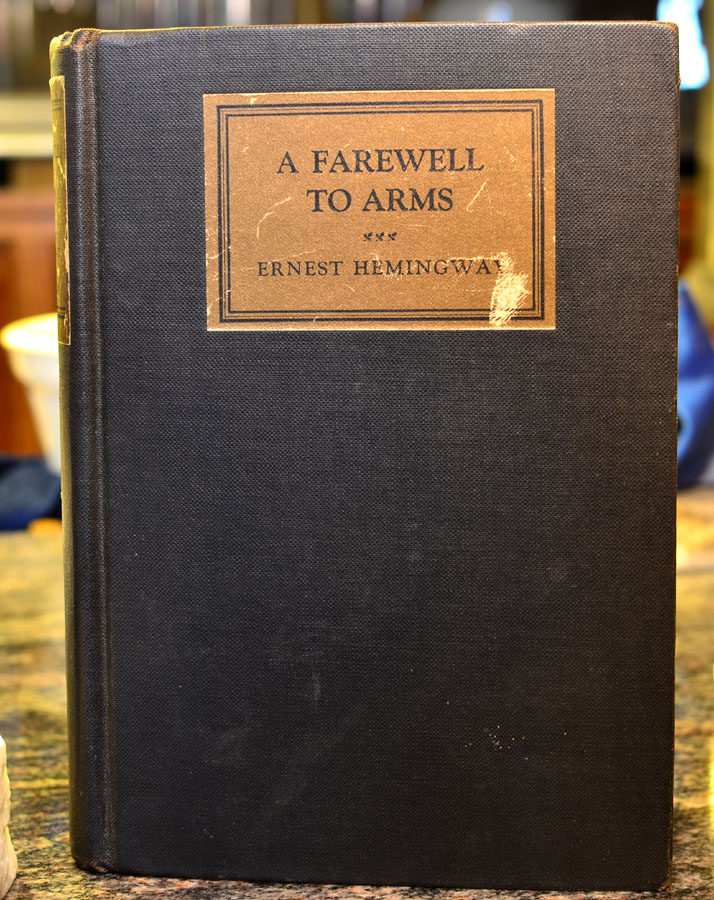
A Farewell to Arms by E. Hemingway. This is the first edition, 1929. The design was made on a jacket and the book itself looked way simpler.   
Another novel by E. Hemingway, The Sun Also Rises, also known as Fiesta. This is the cover for the first edition (1926). As you can see, both covers were design in the style of art nouveau.

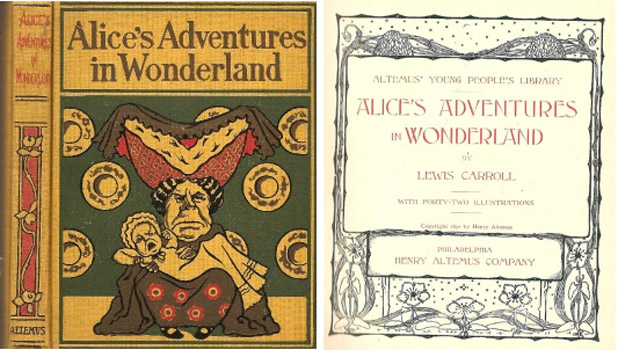
Lewis Carrol, Alice in Wonderland. This book is famous for its creative covers and also for having billions and billions of them. This particular one is from 1900-1901, but I personally like this by H. Altemus Company (1895) more.
A Midsummer Night's Dream by William Shakespeare. The design of the cover was made by a famous illustrator Paul Hogarth who worked a lot with Pinguin. This interpretation of his of a classical shakespearean comedy is considered quite rare. 

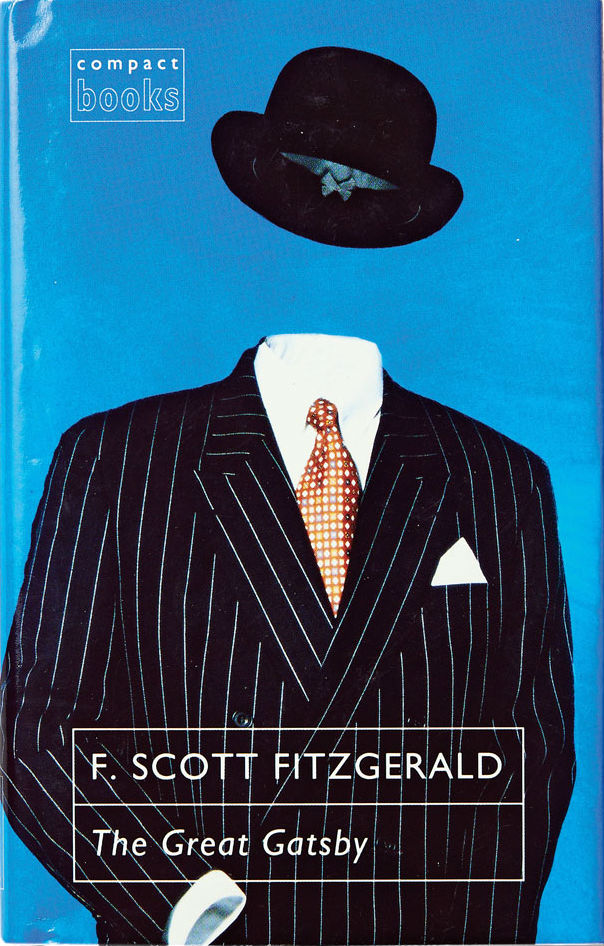
The Invisible Man by H.G. Wells. Penguin always has awesome ideas for book covers (this one is from Signet Classics Series), and sometimes, they say, they steal those ideas. Or other steal from them, who knows. Look at this edition of The Great Gatsby from Compact Books (a British publishing house), and compare the two covers yourself.

16 Jul 2014

Reading Good Literature Makes You A Better Person

Theory of Mind (or ToM) is a basic principle of the human mind. It requires an ability to feel empathy, which is believed to have kickstarted the evolutionary development of the human intellect. In this light, good literary fiction can greatly enhance ToM as it serves as some kind of a training device where people can perfect their empathetic skills. According to the research, carried out by David Kidd and Emanuele Castano from the New School for Social Research in New York (now known as simply the New School), reading challenging, high-quality fiction enhances a set of skills and thought processes that are fundamental to complex social relationships, i.e. the functional societies.

The main hypothesis that Kidd and Castano based their experiments on was that characters in high-quality literature are of a very complex and diverse nature - it is, therefore, not easy to decipher their motifs, understand what stands behind their choices, feelings, actions, etc. In order to do it, the reader needs to apply certain psychological skills that would allow to get into that character's shoes. Meanwhile, the schematic nature of characters from second-rate literature does not offer this possibility. Therefore, reading good books develops the important skill of empathy, which is that that cultivates humanity and brings us to a higher level of evolution (not labour, as we all thought - sorry, Engels).

In order to prove this hypothesis, Kidd and Castano performed five tests to measure the effect of reading literature fiction on participants' ToM. 

Initially, the participants had to undergo Author Recognition Test that allowed to evaluate their level of erudition regarding literature. Then every participant received one of six texts chosen for the experiment. Three of those were high-quality literary texts (excerpts from prize-winning books or celebrated stories of world-renown authors (e.g., A Chameleon by Checkov)), while the rest were those of non-fiction, sci-fi, second-rate romance novels, etc. Then, after participants completed the reading part, their ToM capabilities were tested, using several well-established measures. One of those measures, for example, was the "Reading the Mind in the Eyes" test, which asked participants to look at black-and-white photographs of actors' eyes and indicate the emotion expressed by that actor. Across experiements, it was found that participats who were assigned to read literary fiction performed significantly better on all of the five ToM tests.

The tests' results on understanding others' mentals states after reading different texts. Literary ficion = hight-quality literature, popular fiction = bestsellers, no reading = no texts (participants from control group). RMET - Reading the Mind in the Eyes, DANVA - Diagnostic Analysis of Nonverbal Accuracy (identified emotions from photographs). 
The results indicated that high-quality literature was favoured less than excerpts from popular fiction. Nevertheless, at the same time participants recognized it as more 'artistic' and generally better in literary light. Also, it appeared that participants had a higher level of emotional involvement when reading high-quality texts. Most importantly, however, the study showed that not just any fiction was effective in fostering ToM, rather the literary quality was the determining factor. 

Such research suggests that the reason for literary fiction's impact on ToM is a direct result of the ways in which it involves the reader. Unlike popular fiction, literary fiction requires intellectual engagement and creative thought from its readers. "Features of the modern literary novel set it apart from most bestselling thrillers and romances. Through the use of [...] stylistic devices, literary fiction defamiliarizes its readers," wrote Kidd and Castano. "Just as in real life, the worlds life literary fiction are replete with complicated indiviaduals whose inner lives are rarely easily discerned but warrant exploration."

Reading good literature develops the ability to understand, empathize and better co-exist in functional community, and therefore makes you a better person. Not a bad thing.

29 Jun 2014

World's Most Beautiful Libraries: Part 1

When it comes to reading, there are two important things: the book itself and the place where you read it. Anthony Throllope famously said that nothing can be more luxurious than merely a sofa and a cup of coffee to accompany a good book. But for some, with a more extravagant taste, this is not enough.

So oh how happy are those living in Europe since there are libraries of the most beautiful interior - and the most beautiful books - in the world.

In this post series, I will be making up a list of the most stunning libraries that are definitely worth checking out if you are a book worm with a luxurious taste.

1. Wiblingen Abbey Library in Ulm, Germany
Situated in a former Benedict Abbey (in the North wing of it), the library was completed in 1744. Its facade was modelled on the Austrian National Library, or Imperial Court Library, as it was called before, in order to demostrate the attachment to the imperial house.
The library is constructed in the airy and whimsical Rococo syle, and is considered to be on of its finest examples. The library has exquisite ornamental features, long galleries supported by numerous columns, countless statues, and most gorgeous ceiling fresco that makes library be perceived as a place preserving "treasures of wisdom and science", as originally intended by the architect.


2. Klementinum in Prague, Czech Republic
Klementinum is the largest and most historic building complex in Prague's Old Town. It includes Mirror Chapel, famous Library Hall, Astronomical Tower, and two churches - St. Salvator and St. Clement. The Library Hall, designed in stunning baroque, is a home to 20 000 books that date as far as the 16th century. Built in 1722, it hasn't changed its foundation since and maintained all its frescos, paintings on the cupola, and famous large globes. Interestingly, the Library Hall of Klementinum was mentioned in The Secret Miracle, a short story by Jorge Luis Borges. There, the librarians of Klementinum were looking for God in the books of the library. (It will be my next read.)


3. Marfa Palace Library in Marfa, Portugal
Marfa National Palace, 28 km from Lisbon, is a palace-monastery designed in Baroque and Neoclassicism. It is mostly famous for its major library that is 88 metres and is the longest Rococo monastic library in the world. It includes 35 000 rare, leather-bound books, and they say that bats live in this library and at night eat insects that would feast on the book pages.


4. Bodleian Library in Oxford, United Kingdom
The main research library of Oxford University is also known as 'Bodley' or simply 'the Bod'. It was the first time for the English to shelve books along the walls, instead of putting them in bays or lecterns protruding from the walls. This is one of the oldest libraries in Europe and contains over 11 million books in print. One of the most famous books Bodleian Library has are  Shakespeare's First folio (1623), Gutenberg Bible (1455), and Bay Psalm Book (1640). The latter two are one of the only surviving copies in the world - 21 and 11 accordingly.
Also, Borleian Library serves as a location for many films and TV series. I was quite excited to find out that the Hogwarts library from the Harry Potter series was actually filmed there.


5. The Escorial Library in San Lorenzo de El Escorial in Spain
Located at 49 km from Madrid, the library is a part of a building complex that includes a monastery, a royal palace, a school, a basilica, a museum, two pantheons, an art gallery, and lovely gardens. The library, completed in 1585, established the template of using books to decorate the walls, which has been used ever since. Almost 45 000 printed works from the 15th and 16th centuries, as well as around 5 000 manuscripts, have found home in the Escorial Library, also famous for its ceiling frescos that depict all seven liberal arts: Rhetoric, Dialectic, Music, Grammar, Arithmetic, Geometry, and Astronomy.

25 Jun 2014

Bloglovin'

It took me a while to figure out that Blogger offers no subscription tool. Now I know it's been a year since they took Friend Connect off. Don't smirk. Instead, Follow my blog with Bloglovin! 

24 Apr 2014

Dewey's 24 Hour Readathon

Just recently I found out about the Dewey's 24 Hour Readathon, that apparently is a huge thing.
Because I am a newcomer in the book blogging world, and also because I am greedy, I want to bite a piece of the readathon cake, which promises to be quite interesting considering my read list!

Write Good or Die by multiple authors (173 pages) REVIEW
A Tale of a Tub by Jonathan Swift (158 pages)
Sandwiches by Sarah Tyson Heston Rorer (128 pages)
The Raven by Edgar Allan Poe (46 pages)
The Battle of the Books by Jonathan Swift (23 pages)

As you can see, all the works are not too voluminous. But, by the descending page number of the books I picked, you can also see how nervous I am about the upcoming ordeal! I don't want to fail, no-no-no, especially not at my first time! So this is why I picked some small pieces, no more than 50 pages, in order to get at least 3 out of 5 books done!

Here, as well as in my recently created Twitter account (@olga_rabo), I'll be making updates on  my progress and results! I am extremely excited and am very looking forward to sharing this experience with other participants!

Who else is taking part in the Readathon? Share your book lists!

5 Apr 2014

How Books Are Born

Has it ever occurred to you that we don't appreciate physical books anymore? Well, at least not as much as we used to. We literally take paper books for granted, assuming that they are going to stay there forever and that our 'romance' with e-books is no more than just a mere fling. It is true that nowadays we give more and more preference to e-readers instead of traditional books. And it's understandable: e-books are way cheaper, always available and it's easy to transport them, without having to worry about overweight in the airport.

As a consequence, though, we eventually stopped appreciating the art of bookmaking.

The first print book ever was made by Johannes Gutenberg in 1454, Mainz, Germany. That makes the bookmaking craft only 560 years old. Not that much, if you think about it. So it makes me just sad to realize that the art of bookmaking may die so young and that the books themselves will eventually end up as objects that are merely massing dust.

Take a look at this 2-minute video made by Daily Telegraph that shows how hardback books are made. The birth of books is a long, complicated process carried out with love and patience so that we, bookworms, would always have something to sniff. I know. Sounds great, doesn't it?


Powered by Blogger.
Designed By Boutique-Website-Design